In this unit, you’ll learn all about the Past Perfect tense. You will learn when to use it, how to form it, and how to construct questions with it.
The Use of the Past Perfect
Here is a brief overview of when to use it:
- past event that happened before another past event:
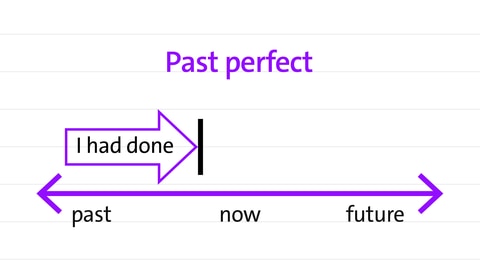
The Past Perfect is used to describe an event that happened even earlier to another event in the past.
⟹ We did not understand why he hadn’t called already.
⟹ She had put on a nice dress before she went out.
- unfulfilled wishes / something that could have been (type 3 if-clause):
The Past Perfect is used in type 3 if-clauses to highlight unfulfilled wishes.
⟹ If I had been better, he wouldn’t have won.
⟹ They would have stayed with me, if I had had a bigger apartment.
Form and spelling
The Past Perfect is formed with the word had and the past participle of a verb. The past participle is formed by adding -ed to the end of a verb. But be careful, sometimes the verb has an irregular past participle form. At the end of this chapter, you can find a list of all the irregular verb forms.
If you want to ask questions with the Past Perfect, you will have to invert the sentence structure:
Signal words and irregularities
Signal words that tell you to use the Past Perfect are: after, when, as soon as, before, already, since, once, …
Attention! Irregularities that you should watch out for are irregular past tenses of verbs: