In this chapter, you will learn all about the Present Perfect Progressive. You will learn when to use it, how to form it, and how to construct questions with it.
The Use of the Present Perfect Progressive
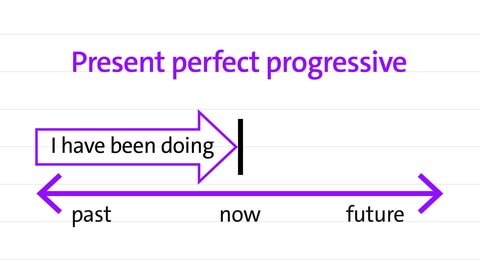
The Present Perfect Progressive can be used to talk about events that focus on the duration of an action, telling us how long an activity has been going on. Although it is quite similar to the Present Perfect, we will also show you how to tell the two apart.
| Present Perfect | She has written a letter. | = result |
| Present Perfect Progressive | She has been writing a letter. | = activity |
Here is a quick summary of when to use it:
- ongoing actions that started in the past:
Use the Present Perfect Progressive when actions started in the past and are continuing into the present, focusing on the activity.
⟹ I have been painting for two days now.
⟹ He has been sleeping all day.
- activities that have been going on for some time and have just ended:
When you want to emphasise the activity rather than the result of an action that has just ended, use the Present Perfect Progressive.
⟹ How long have you been waiting?
⟹ She has been dying to finally tell you.
- actions that have been happening repeatedly in the past and are still happening:
Often, the Present Perfect Progressive can emphasise ongoing, repeated actions in combination with the words for, since, or how long.
⟹ We have been playing football every week for years.
⟹ It has been raining every day since October.
The use of Present Perfect Progressive indicates that the action has been affecting the present tense.
Form and spelling
The Present Perfect Progressive is formed using have/has been and the -ing form of a verb.
If you want to ask questions with the Present Perfect Progressive, you will have to invert the sentence structure:
Signal words and irregularities
Signal words that tell you to use the Present Perfect Progressive are: for, since, how long, ...
They answer the question “How long“? (duration of an action)
Exercises: Present Perfect Progressive