In this unit, you will practice using if-clauses to express conditions and their results in English. If-clauses will make your writing and speaking more precise and natural.
If-clauses show a condition and its result. They describe what happens, what would happen, or what would have happened depending on something else.
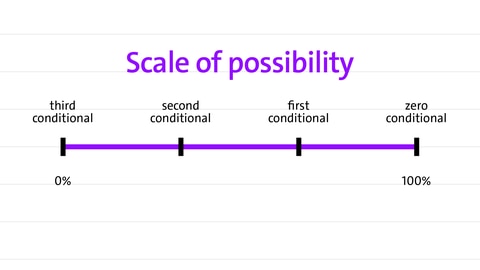
There are several types of if-clauses:
BR
Zero Conditional – General truths or rules
Used for facts or things that are always true. e.g.: If a player commits a foul, the referee blows the whistle. Form: If + simple present, simple present
First Conditional – Realistic future possibilities
Used for possible situations in the future. e.g.: If you arrive late, you won’t get a good seat in the stadium. Form: If + simple present, will/won’t + infinitive
Second Conditional – Unreal or hypothetical situations
Used for imaginary or unlikely situations in the present or future. e.g.: If I worked at Wembley Stadium, I would watch every match for free.Form: If + simple past, would + infinitive
Third Conditional – Imagined past events
Used for situations that didn’t happen in the past and their imagined results, e.g.:
If he had scored that penalty, we would have won the game. If I had come here 20 years earlier, I would have seen the original Wembley Stadium. Form: If + past perfect, would have + past participle
Exercise of Types of If-Clauses