This unit will introduce you to the language of film and help you to understand how formal features like camerawork, lighting or symbols contribute to creating meaning in films.
Summary
This is an overview of the most important terms and techniques of film analysis:
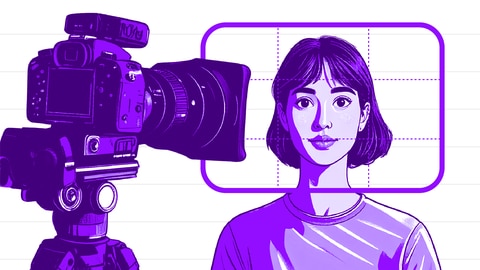
1. Category: camera angles
| term/technique | explanation |
|---|---|
| wide shot | gives an overall sense of the scene |
| medium shot | focuses more on action and interaction between characters; depicts body language |
| close-up shot | reveals facial expressions and emotions in detail |
| high angle shot (bird’s view) | makes characters or objects appear small or vulnerable |
| low-angle shot (worm’s eye) | makes characters or objects look powerful and dominant |
| over-the-shoulder shot | positions the camera behind one character’s shoulder; the focus lies on the person or object the camera is facing |
| reverse-angle shot | shows the reaction of the person being spoken to rather than the speaker |
2. Category: cinematography/camera movement
| term/technique | explanation | |
| static shot | creates calm and slow moments | |
| tracking shot | filmed with a handheld camera, for example; injects energy and speed | |
| steadicam (gimbal shot) | uses a motorized, handheld stabilizer (the gimbal) to capture smooth, fluid footage while the camera is in motion | |
| zooming in/out | shifts focus and reveals different details within the frame |
3. Category: lighting, sound and more
| term/technique | explanation | |
| high-key lighting | feels warm and inviting | |
| low-key lighting | adds mystery or drama | |
| back-lighting | can create silhouettes, making the subject appear darker | |
| soundtrack | all the audio components (pop songs, classical music, sound effects, …) used in a movie | |
| diegetic sounds (dialogue, sounds, noises) | sounds that originate from the story world | |
| non-diegetic sounds (voice-over, music) | sounds like voiceovers or background music; the characters don’t hear them, but they help create mood and meaning for the audience | |
| colours, symbols and motifs | colours and symbolic objects are often repeated throughout a film.; they function as motifs to reinforce the themes or create a certain atmosphere |
4. Category: editing
| term/technique | explanation | |
| cut | the shifts from one camera angle to another – more cuts often mean a faster, more hectic pace | |
| jump-cut | a sudden jump forward in time or position within the same scene, creating a jarring effect | |
| fade-in/fade-out | smooth transition: one shot gradually disappears while another gradually appears; so, for a brief period both images are visible and overlap on the screen. |
5. Category: narrative techniques
| term/technique | explanation | |
| POV (point of view) | the perspective from which a story is told or shown | |
| linear vs. non-linear narrative | following events in chronological order vs. jumping back and forth in time | |
| flashback vs. foreshadowing | the plot travels back in time, revealing background information or character details vs. hinting at future developments, building anticipation | |
| plot twist & caught off guard | while plot twists deliver surprising turns in the story, they make the story’s protagonists sometimes feel caught off guard |