In the following, you will practice using collocations in English. You will learn how words commonly go together to sound more natural and fluent in your writing and speaking.
Summary:
Collocations are combinations of words that are commonly used together in English. They sound natural to native speakers, while other word combinations might seem odd or incorrect. For example, we say “make a decision” instead of “do a decision”, or “strong coffee” instead of “powerful coffee”.
Let’s form more collocations! The adjective “strong” goes with nouns like ...
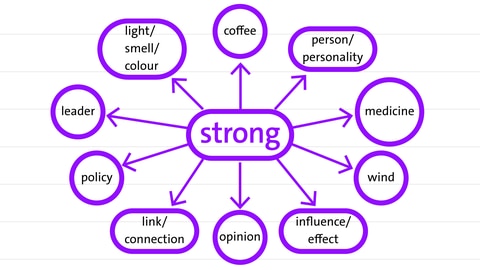
Learning collocations helps English learners to speak and write more fluently and naturally, as well as to understand how words are typically used in context. Practicing collocations improves both accuracy and confidence in communication.
You can learn collocations by exposing yourself to English through music, books, articles, movies, and series, or by making your own list of commonly used word combinations.
Four main types of collocations
1. verb – noun
- to catch a cold
- to make a decision
- to take a break
- to solve a problem
- to give advice
2. adjective – noun
- strong coffee
- tough decision
- close friends
- heavy rain
- high expectations
3. adverb – verb
- to strongly recommend
- to deeply regret
- to completely forget
- to carefully consider
- to fully understand
4. noun-preposition collocations
- demand for
- room for
- fear of
- decrease in
- trouble with
- in danger of
- in common
Exercises: How to Use Collocations