|
The programme
explores two examples of diseases in which the immune system's
defences turn against the body it is supposed to protect.
1. Transplant
Many
patients who have suffered severe damage to an organ can be
helped only by the transplant of an organ from a donor. The
film shows a patient who can lead virtually a normal life
thanks to a donated kidney. However, he must take medicines
for the rest of his life which keep the immune system in check,
as it would otherwise destroy the foreign organ.
An animated
film sequence shows how the immune system is programmed to
recognize and attack tissue which is foreign to the body.
Undesirable
defence reactions can be avoided to a certain degree by careful
selection of a matching donated organ. When choosing donor
and recipient, care is taken that the tissue properties of
the two people deviate as little as possible from one another.
But the
immune system must be restrained even when there is a good
tissue match. Another animated film shows why.
The removal
of donor organs is strictly regulated. The brain death of
the donor must be established beyond a doubt. Nevertheless,
it is often difficult for the family members to give their
permission. It is simpler when the donor ordered while still
alive that his organs could be removed and used for transplants
after his death.
2. Autoimmune
diseases
Multiple
sclerosis and inflammatory rheumatism are two examples of
autoimmune diseases. The name comes from the fact that the
immune system attacks the body's own tissue.
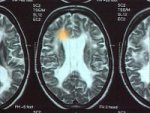
In the
case of multiple sclerosis, nerve pathways in the brain are
attacked. Inflammatory rheumatism leads to destruction of
the bone tissue.
A cure
has not been found for either of these diseases; physicians
are able only to relieve the symptoms.
|