Episode 3: Saboteurs in Action - AIDS, the Worldwide Epidemic
Timecode list

Timecode 00:25 - 02:47

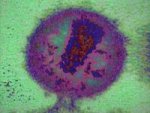
HI virus

AIDS - an epidemic goes around the world

It was 1983 before the pathogen which caused the immunodeficiency disease AIDS was identified. The virus continues to claim many lives. Anyone who falls ill with AIDS must become used to the idea that the disease can be treated, but that there is no cure.


Timecode 02:48 - 06:22

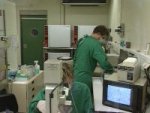
AIDS laboratory

HIV attacks the immune system

The HI virus destroy important cells of the immune system on which the body is heavily dependent for defence against pathogens. The attacks of the HI virus weaken the patients. Many are unable to work any more. Besides the life-threatening illness itself, there is often the loss of the accustomed social environment.


Timecode 06:22 - 09:10

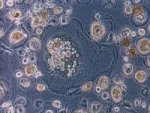
HI virus introduces its genetic information into phagocyte

The strategy of the HI virus

The HI virus introduces its genetic information into the cells of the immune system in order to reproduce. The phagocytes and T-cells in particular are the targets; they die after the virus invasion.

Start animated film
(Length: 2:48 min)


Timecode 09:10 - 12:47

AIDS therapy

Examples of AIDS therapies

The reproduction of the AIDS virus can be inhibited by various effective substances. Researchers have developed a series of counter-strategies.


Timecode 12:48 - 16:51


The stigma HIV positive

As the HI virus is transmitted primarily by sexual contact, people who have been infected have to fight against prejudices. Many suffer social and professional discrimination. It is impossible to overlook the historical parallels to syphilis and other "venereal diseases."


Timecode 16:52 - 19:39

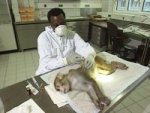
Vaccine in animal experiment

Vaccines for the HI virus

Researchers are searching for vaccines for the HI virus around the world. Hope comes from animal experiments with apes, which have been successfully vaccinated against a similar virus.

Start animated film
(Length: 0:22 min)


Timecode 19:39 - 22:33

AIDS patient

AIDS in Africa

The African countries have been hit hardest by the AIDS epidemic. Sexual behaviour, lack of medical education and care contribute to the spread of the virus. The mortality rate, especially for younger people, is so high that social structures are threatening to collapse and economic need is increasing.


Timecode 22:33 - 25:58

Children in training programme

AIDS and prostitution

Just as in Africa, the spread of AIDS in Asia is aided by prostitution. Young people especially, some of them still children, are both victims and sources of infection. Lacking adequate education and professional qualifications, many of them see the sex trade as their only way of making a living. National training programmes are intended to provide alternatives.


Timecode 25:59 - 27:12

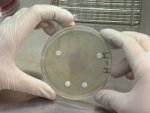
Resistant pathogens

Risks from resistant pathogens

Experience teaches us that medications which were originally highly effective lose their protective abilities at some point. Example: antibiotics. Pathogens are able to become resistant to even the best medications.


Content

The programme is concerned with the infectious disease AIDS, which has spread around the world since its discovery. The afflicted patients suffer not only from the debilitating symptoms of the disease itself, but are also alienated by parts of society. AIDS is transmitted primarily by sexual contact.

The AIDS virus destroys important cells of the immune system and renders the victim defenceless against many other pathogens. This process is shown in an animated film.

There are a number of chemical substances which slow down the reproduction of the virus. Another animated film shows how these substances work. A combination therapy, the so-called "cocktail," has proven to be especially effective. Mixing a number of substances helps to hinder the development of resistance to individual substances.

Researchers all over the world are searching for a vaccine for the HI virus. Results in animal experiments have been encouraging. But no decisive breakthrough has been achieved for human beings.

The best protection against AIDS is education. How can you protect yourself from being infected? The programme also discusses this question.

Developing countries have been hit much harder by the AIDS epidemic than the industrialized nations. Lack of education and prostitution contribute to the spread of the virus. Exemplary educational and employment projects attempt to offer people a viable alternative to prostitution.