Episode 1: Microbes and Their Killers - Basics of the Immune System and Vaccination
Timecode list

Timecode 00:25 - 02:02

Defence

The defensive battle

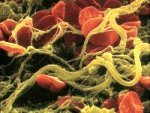
The immune system, just as an army on alert, fends off hostile pathogens which could become dangerous for the human body.


Timecode 02:02 - 06:33

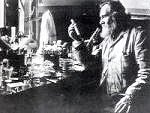
Ilya Metschnikoff

The non-specific defence

The Nobel Prize winner Ilya Metschnikoff found out that there are cells patrolling the human body which track down and literally devour pathogens.

Start animated film
(Length: 1:21 min)


Timecode 06:34 - 10:42

Antibodies

The specific defence

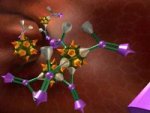
The Nobel Prize winners Paul Ehrlich and Emil von Behring discovered antibodies in the blood which, in contrast to the non-specific defence, render specific pathogens harmless.

Start animated film
(Length: 1:02 min)


Timecode 10:43 - 11:38

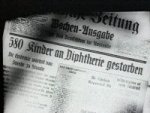
Diphteria headline

The passive immunization

Children who have come down with diphtheria are injected with animal antibodies. In other words, every patient receives foreign antibodies which were not formed by his own immune system. This is why we speak of a passive immunization.


Timecode 11:39 - 13:23

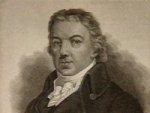
Edward Jenner

The active immunization

Edward Jenner is regarded as the founder of modern vaccination: the principle: after being vaccinated with weakened or deactivated variants of a pathogen, the body forms defensive substances and cells which protect it from becoming ill if infected with the more dangerous, active variants of the pathogen.


Timecode 13:23 - 17:36

T-cells

The coordination of the defences

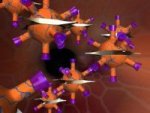
T-cells coordinate the defences. If they recognize foreign antigens of pathogens on cells which are presenting antigens (e.g., phagocytes), then they give the B-cells the command to produce the appropriate antibodies. These antibodies track down the pathogens so that they can be eliminated by the phagocytes. The defensive battle takes place in the intricately branching network of the bloodstream and lymphatic system.

Start animated film
(Length: 2:32 min)


Timecode 17:36 - 19:27

Smallpox vaccination

Success story protective vaccination

Smallpox is an example of the success of extensive protective vaccinations. It was possible to restrict the spread of the virus so drastically that it has been considered as eradicated since 1977. Protective vaccination has proven its worth for other pathogens as well.


Timecode 19:27 - 22:49

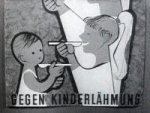
Vaccination advertisement

Polio virus

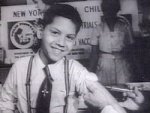
Extensive vaccination campaigns fighting the polio virus have led to the today's fortunate situation that cases of polio are virtually unknown. Nevertheless, the virus remains a risk, so it is not possible today to waive the need for vaccinations. The resistance to vaccinations found in parts of the general population favours the spread of pathogens.


Timecode 22:49 - 27:12

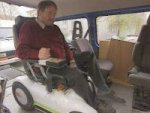
Effects from polio

Lack of vaccination protection a risk!

The case of a man suffering from polio shows what consequences a lack of vaccination protection can have. But even vaccinations contain a risk. While harmful effects from vaccination are extremely rare, they cannot be completely excluded.


Content

The programme describes basic functions of the immune system, the body's defence against the causes of infections.

The researchers Ilya Metschnikoff, Paul Ehrlich and Emil von Behring made decisive contributions to understanding the defence mechanisms. Historical reconstructions clearly show how these men made their pioneering discoveries.

Animated films show what we mean in speaking of non-specific and specific defences. In addition, there is an explanation of the difference between passive and active immunization.

Edward Jenner's experiments paved the way for modern protective vaccinations. An historical reconstruction shows how the first smallpox protective vaccination was performed. This is an active immunization during which the body itself forms the required defence cells and substances, which then protect it from repeated infections.

The effectiveness of modern vaccines is based on active immunization. Example: The vaccine for the virus which causes polio.

Anyone who does not take advantage of the protection provided by vaccinations is taking avoidable health risks. This is shown by the case of a man who has been suffering from the effects since coming down with polio and is now confined to a wheelchair.